
Past Perfect (Plusquamperfekt) — The Past before the Past 🦖🦕
The Past Perfect (Plusquamperfekt) defines an action that happened before another past action. It follows the exact same structure as the normal Perfect tense, but the helping verb ('haben/sein') is conjugated into the simple past tense (hatte/war).
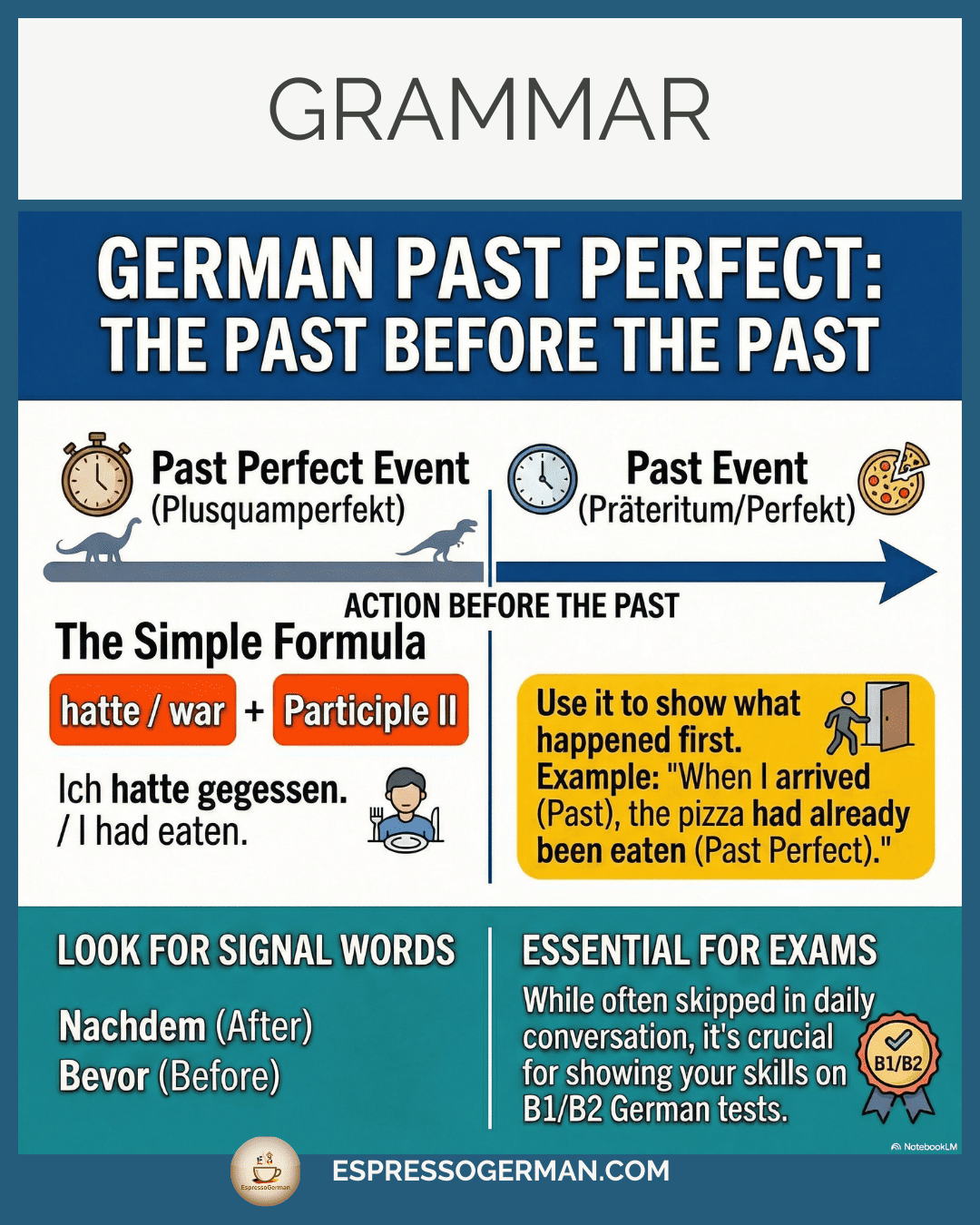
Welcome to the dinosaur era of tenses.
The Plusquamperfekt describes something that happened before another past event.
Example:
"When I arrived at the party (Past), the pizza had already been eaten (Past Perfect)."
The Formula 🧪
It is exactly like the Perfect Tense, but you change the Helper Verb (haben/sein) into the Simple Past (hatte/war).
hatte / war + ... + Participle II
- Perfekt: Ich habe gegessen. (I have eaten).
- Plusquamperfekt: Ich hatte gegessen. (I had eaten).
Examples in Action 🎬
With "Haben" verbs
- Als ich ankam, hatten sie den Film schon gesehen.
- (When I arrived, they had already seen the movie).
With "Sein" verbs
- Nachdem er aufgestanden war, putzte er sich die Zähne.
- (After he had stood up, he brushed his teeth).
- Aufstehen implies movement/change, so we use war (was), not hatte.
When do I really need this?
Honestly? Rarely.
It appears mostly in storytelling or specific "After X happened, Y happened" structures (Nachdem...).
In daily conversation, Germans are sloppy and often just use Perfekt for everything.
- Nachdem ich gegessen habe, bin ich gegangen. (Technically correct: gegessen hatte).
But for B1/B2 exams, you need to show off that you know the difference!
Summary Table
| Tense | Helper | Participle | Meaning |
|---|---|---|---|
| Perfekt | habe / ist | gemacht | I have done |
| Plusquamperfekt | hatte / war | gemacht | I had done |
Signal Words 🚦
How do you know you need Past Perfect? Look for these time markers:
- Nachdem (After): Nachdem er gegessen hatte, ging er. (After he had eaten, he went).
- Bevor (Before): Bevor er ging, hatte er gegessen. (Before he left, he had eaten).
These conjunctions link two points in time, making the sequence clear.
Common Mistakes ⚠️
- Using it alone: You rarely say "I had eaten" in isolation. It almost always needs a second sentence in Simple Past to make sense ("...before I did X").
- Mixing up War/Hatte: Remember, if the verb uses Sein in Perfect, it uses War in Past Perfect!
See also...
- Simple Past — The helper verb forms (hatte/war).
- Perfect Tense — The basics of Participles.