

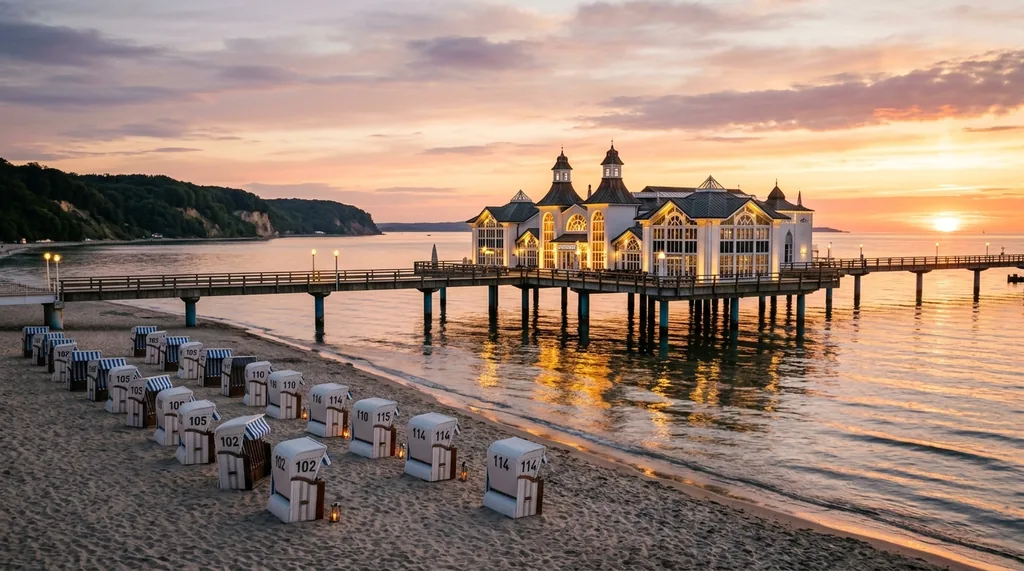
When people think of German nature, they often look south toward the Alps. But if you head all the way north to the Ostsee (Baltic Sea), you’ll find a completely different world of white sandy beaches, dramatic cliffs, and historical maritime cities that feel frozen in time.
The Baltic Coast is more than just a place for a swim; it is a region of "Hanseatic pride" and unique traditions. Here is why the German North should be on your 2026 travel list.
1. Rügen and the Famous Chalk Cliffs
The island of Rügen is the crown jewel of the Baltic. It is most famous for the Königsstuhl—massive white chalk cliffs that tower over the turquoise sea.
- The Specialty: These cliffs were immortalized by the Romantic painter Caspar David Friedrich. You can hike through ancient beech forests (a UNESCO World Heritage site) right along the edge of the cliffs for some of the best views in Europe.
2. The "Seebrücken" and Resort Architecture
One of the most iconic sights on the Baltic Coast is the Seebrücke (Pier). Almost every major resort town has one, stretching hundreds of meters into the sea.
- Bäderarchitektur: In towns like Binz or Sellin, you’ll see stunning white villas with ornate wooden balconies. This "Resort Architecture" dates back to the 19th century and gives the coast a sophisticated, nostalgic atmosphere.
3. The "Strandkorb" Culture
You can't visit the Ostsee without sitting in a Strandkorb (Beach Basket). These iconic hooded wicker chairs are a German invention designed to protect you from the North’s notorious "Frische Brise" (fresh breeze).
- The Etiquette: Most Strandkörbe are numbered and must be rented for the day. It is the ultimate way to enjoy the sun while staying shielded from the wind—perfect for reading your favorite German novel!
4. Hanseatic Charm: Wismar, Stralsund, and Rostock
As we explored in our History of the Hanseatic League article, the North is defined by its merchant history.
Stralsund and Wismar: Both are UNESCO World Heritage sites filled with "Brick Gothic" architecture. Walking through their town squares feels like stepping back into the 14th century.
Rostock: A vibrant university city with a massive harbor. If you visit in August, you can experience Hanse Sail, one of the world's largest gatherings of traditional sailing ships.
5. Language Tie-In: Moin and Plattdeutsch
The Baltic Coast is the heart of Plattdeutsch (Low German). While everyone speaks Hochdeutsch (Standard German), you will hear the locals greeting you with a friendly "Moin!" at any time of day.
- The Logic: Unlike "Guten Tag," which changes based on the time, "Moin" is universal. It’s the linguistic embodiment of the relaxed, direct Northern personality.
Are you a "Mountain Person" or a "Sea Person"? Would you rather be hiking the chalk cliffs of Rügen or the peaks of the Alps? Log in and let us know your favorite German holiday destination in the comments!
Tags: #Ostsee #TravelGermany #Rügen #BalticSea #Hanseatic #Hiddensee #BeachLife
Comments
Please log in to leave a comment.